Let’s clear up one of the dumbest recurring problems in online design sales: people think because they used a mockup, they somehow own more rights than they actually do.
They don’t.
And that’s how you end up with deleted listings, angry clients, marketplace warnings, or that deeply humiliating moment where someone asks for proof of usage rights and you suddenly become very interested in changing the subject.
If you’re selling designs with mockups, the rule is painfully simple: in most cases, you are allowed to use a mockup to present your design, but you are not allowed to resell, redistribute, or hand off the mockup itself as if it were yours.
That distinction sounds obvious until people start packaging products, uploading listing images, sending source files to clients, and casually stepping into legal nonsense with the confidence of a toddler holding scissors.
The Confusing Part Nobody Explains Properly
Here’s the real question designers and sellers should be asking:
Am I legally selling my design… or accidentally reselling someone else’s mockup?
That’s the line. That’s the whole headache.
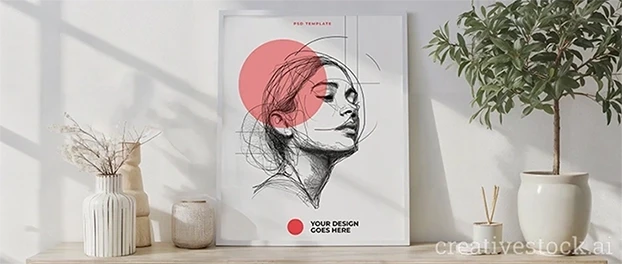
A mockup is usually a presentation asset. It helps you show how your artwork, logo, label, poster, or shirt design looks in the real world.
Great. Useful. Necessary, even.
But the mockup itself usually remains a licensed asset, not a transferable one.
If you place your design onto a mockup and use that image in a product listing, that’s typically fine under commercial promotional use.
But if you include the mockup file itself - the PSD, template, or editable scene - in the product you’re selling, you’re no longer presenting a design.
You’re redistributing someone else’s asset.
If you want the full legal framework behind this distinction, see the AI mockups commercial use legal guide.
For the broader legal background behind licensing and copyright permissions, the U.S. Copyright Office FAQ on commercial licensing rights explains how intellectual property protections work in practice.
Using a Mockup to Sell a Product vs. Selling the Mockup Itself
Designers keep mixing these up because too many people hear “commercial use” and their brain shuts off after the first word.
Commercial use usually means you can use the mockup in work that supports business activity.
That includes:
- product listings
- portfolio presentations
- ads and promotional graphics
- client presentations
- store visuals
So yes - in many cases the answer to can I sell products using mockups is absolutely yes.
But “commercial use” does not mean:
- you can resell the mockup file
- you can include the mockup inside digital bundles
- you can transfer the editable mockup to clients
- you can claim the mockup image as your own work
This is where selling mockup-based designs legally becomes less about design and more about licensing discipline.
For a deeper explanation of licensing rules designers often misunderstand, read mockup licensing for commercial use explained.
A lot of sellers asking “can I sell t-shirts using mockups legally?” are actually asking two different questions:
Can I use a mockup image to market the product?
Usually yes.
Can I sell the mockup image file or bundle it with a product?
Usually no.
Those are not the same thing.
What Counts as Safe Use in Practice
Let’s make this practical.
You’re generally on safe ground when a mockup is used to:
- showcase a design in a product listing
- present work in a portfolio
- promote physical goods like shirts, posters, or packaging
- create marketing graphics
- show design concepts to a client
These are normal scenarios behind questions like are mockups allowed in product listings or how to use mockups legally in online shops.
If you want examples of assets designed specifically for commercial presentation workflows, you can browse commercial mockups built for designers and product sellers.
Where designers get into trouble is when the mockup stops being presentation and becomes part of the product.
Common mistakes include:
- selling the mockup as a downloadable asset
- including editable mockup scenes in template packs
- bundling mockups inside design kits
- redistributing licensed files to customers
Buying a mockup does not mean buying ownership.
You bought usage rights, not adoption papers.

Why Digital Product Sellers Get Burned More Often
Physical product sellers eventually understand this.
Digital product sellers are where the chaos lives.
If you’re selling digital assets - templates, Canva kits, branding packs, Etsy bundles - the licensing boundaries matter even more.
Why?
Because digital products are easy to extract.
For example:
Selling printable wall art and using a mockup image in the preview?
Usually fine.
Selling a “shop starter kit” that includes editable preview scenes built from licensed mockups?
That’s where licensing problems appear.
Selling Canva templates or PSD bundles containing reusable mockup elements is where many sellers accidentally break mockup resale rules.
A common misunderstanding is believing that modifying a mockup gives you ownership.
It doesn’t.
Placing your design onto someone else’s mockup does not convert that asset into your intellectual property.
It just means you used it.
Client Work Is Where Sloppiness Gets Expensive
Another common problem appears in client projects.
A designer uses a licensed mockup in presentations, then delivers all source files to the client - including the mockup.
That’s often a licensing violation.
Many mockup licenses allow presentation use, but not asset transfer.
Before sending project files, ask yourself:
- Is the mockup only used for presentation?
- Is the client receiving flattened visuals only?
- Does the license allow end-client transfer?
- Can the mockup be extracted from delivered files?
If you work with automated or AI-generated mockups in client projects, you should understand the legal risks of using AI mockups in client work.
If you can’t answer those questions clearly, you’re not done.
You’re just in a hurry.
And hurry is where expensive mistakes happen.
What Happens If You Misuse a Mockup Commercially
Let’s answer the question people keep hoping is theoretical.
What happens if you misuse a mockup commercially?
Best case: your listing gets removed.
Middle case: your account gets flagged, listings get suspended, or a client loses trust.
Worst case: copyright complaints, legal notices, or marketplace bans.
The real cost usually isn’t a lawsuit.
It’s operational damage.
Rebuilding listings.
Replacing assets.
Explaining mistakes to clients.
For a broader explanation of intellectual property protection and licensing systems worldwide, the World Intellectual Property Organization provides the official overview.
A senior designer learns this once and never wants to repeat it.
The Smart Way to Use Mockups Without Losing Sleep
If you want a clean system for using mockups in commercial design work, do this every time:
- Check the license before downloading the asset.
- Confirm that commercial promotional use is allowed.
- Verify that redistribution is forbidden.
- Keep records of where the mockup came from.
- Never include editable mockup files in customer downloads unless the license explicitly allows it.
Separate presentation assets from deliverable assets when working with clients.
Most licensing problems don’t happen because designers are malicious.
They happen because people assume things without checking.
And “I found it online” is not a licensing strategy.
It’s a confession.

FAQ
Can I use mockups in product listings for Etsy or Shopify?
Usually yes, if the license allows commercial promotional use. You can display your design on the mockup to market a product, but that does not usually allow you to resell or redistribute the mockup file itself.
Can I send a mockup file to a client after using it in their project?
Not automatically. Many licenses allow presentation use but do not allow transferring the editable asset to clients. Unless the license explicitly allows end-client usage rights, you should deliver flattened visuals instead.
What’s the fastest way to check whether I’m using mockups legally?
Ask three quick questions:
Is the mockup only presenting your design?
Is the mockup file being redistributed or bundled?
Does the license clearly allow your intended use?
If the answer is unclear, stop and verify before publishing anything.
Can I sell designs using mockups on Etsy?
Yes - as long as the mockup is used only to display the design and is not included as part of the downloadable product. If the mockup file itself becomes part of the product being sold, you may violate the original license.
Final Thought
Using mockups to sell designs is normal.
They help customers visualize products, improve presentation, and make listings look professional.
But selling designs with mockups only works safely when you understand one simple rule:
Use the mockup to sell the product.
Don’t sell the mockup itself unless you actually have the rights to do so.
If you’re evaluating asset libraries or mockup sources for professional projects, check the CreativeStock pricing to understand what licensing coverage and usage rights are included.
Audit your mockups, check your licenses, and stop building a business on crossed fingers.