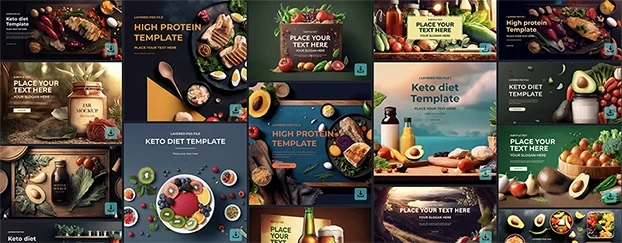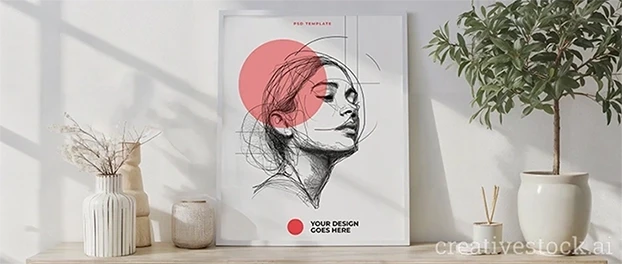

Let me guess: you’re still billing by the hour, juggling five “quick” edits from three clients who “just need a few sizes,” and wondering why the brief mysteriously turned into a Pinterest board of 47 screenshots. Meanwhile, procurement pushed your quote into a black hole and the campaign launched… using marketplace assets that look dangerously decent. I’ve been a designer for two decades. I’ve watched trends come and go. This one isn’t a trend. It’s a structural change (see the bigger picture in creative industry trends 2026). And yes, the best design marketplaces are replacing a big chunk of contractor work in 2026. Not because clients hate designers. Because they love speed, consistency, and predictability more than our tortured process docs.
Before you clutch your Wacom like a life raft, breathe. This isn’t the “design is dead” sermon. It’s me - permanently coffee-stained, selectively cynical, telling you how to win because of marketplaces, not in spite of them.
The uncomfortable math: marketplaces crush friction
Procurement teams don’t wake up plotting to ruin your vibe. They wake up needing assets they can deploy today, across 12 channels, with legal clarity and brand consistency. A good marketplace bundles that: clear licensing, instant availability, and an asset library that fits the calendar, not your bandwidth. That convenience is the point, not the aesthetic. Platforms that pair AI generation with human finishing push this even further: the files aren’t just fast; they’re polished and editable. (If you still think marketplace = janky clip art, enjoy 2012. The rest of us have work to do.)
“But my bespoke craft!” Sure. For the 20% that actually needs it.
Here’s the hard truth from too many kickoff calls: 80% of what brands request is repeatable system work - campaign extensions, size variants, routine mockups, seasonal social frames. That’s what digital design marketplaces excel at. The bespoke 20% - category-defining identity, strategy, the one concept that actually moves a metric - still needs designers with teeth. You want more of that 20%? Offload the repeatable 80% to creative stock platforms without sulking. Clients will thank you. Your calendar will, too.
Marketplaces didn’t “steal” work; we gave it away with our process debt
When you quote two weeks for something that should take two hours, clients learn. They learn that asset library tools let them ship while you debate whether the kerning is “emotionally off.” (It is. But they ship anyway.) The top creative asset platforms won because they collapsed searching, previewing, formatting, and QA into one flow. If your own workflow can’t match that time-to-value, you look expensive - even when your work is better. If you’re not sure where your hours leak, start by auditing your design pricing mistakes.
Want to compete? Stop selling deliverables. Sell certainty. Sell speed + taste + outcomes. Marketplaces set an expectation floor. You decide if you stand on it or leap off it.
What the best platforms actually do better than contractors
Let’s be precise:
- Time-to-first-visual: Instant. Senior stakeholders don’t read decks; they react to pictures. Marketplaces give them pictures now.
- Coverage at scale: Social, OOH, packaging, ecommerce - one library feeds them all. You won’t out-volume a platform this year, and you shouldn’t try.
- Consistency: Style-linked bundles and collections maintain a visual system across formats. No more roulette with five different freelancers.
- Legal & licensing: Compliance is productized - huge for enterprise.
- AI acceleration with human-grade finishing: It’s not raw generation; it’s curated, editable, and production-friendly. That’s why clients trust it for go-live, not just “mood.”
If you’re rolling your eyes at AI design resources, try a simple test: time how long it takes you to get a credible campaign mock into a client’s doc versus dropping their creative into a ready-made, high-resolution mockup that actually looks like a real photo. If your path is slower (and it is), you just lost the first impression battle.

Designers still don’t get it (and yes, I include past-me)
I used to treat marketplaces like competition. That was dumb. They’re infrastructure. They handle the commodity layer so my brain can fight bigger fights: positioning, message hierarchy, visual systems that survive the seventh stakeholder, not just the first. When I embraced mockup marketplaces and AI-powered design marketplaces, my billables didn’t drop - they shifted. Less grunt work, more direction. Less overnight resizing, more creative ops and design QA. And my clients… stopped ghosting.
How to win because of marketplaces (practical, no fluff)
- Define your “marketplace boundary.”
Draw a line around anything repeatable: device mockups, packaging previews, social variations, banner crops. That’s marketplace territory. Reserve your time for system creation and decision-heavy work. Put this boundary in your SOW so expectations are explicit. - Build a curated library that matches your core accounts.
Don’t wait until a campaign is on fire. Create a private shortlist of go-to collections tailored to each client’s channels and product shapes (devices, apparel, CPG packaging, print materials). Updating that shortlist weekly takes 10 minutes and saves hours later. Bonus: you’ll look eerily fast in live calls. - Productize your speed.
Offer a “24-hour concept sprint” that uses design resource platforms for first-look visuals, then sell an upgrade path for custom photography/illustration once traction is proven. The marketplace becomes your proof engine, not your competitor. - Treat mockups as research, not decoration.
Use realistic, ready-to-use templates to A/B stakeholder reactions before you commit to photo shoots or 3D. You’ll kill losing directions early, and nobody will miss them. (They will pretend they do. They don’t.) - Stack your SEO and discoverability.
Clients search “best design marketplaces 2026” and “why brands use marketplaces instead of contractors.” If you publish case studies using those phrases - minus the keyword stuffing - you’ll catch the research phase. (Yes, keywords matter; yes, write like a human. You can do both.) - Reframe your value in the room.
Stop arguing that you can hand-craft faster than a platform. You can’t, not at scale. Argue that you decide what deserves hand-craft and why. Frame marketplaces as your toolkit, not your replacement. When you own the decision tree, you own the budget.
Where marketplaces still need you (and will for a while)
Brand systems and originality: Templates don’t set strategy. You do.
Edge cases: Regulated industries, weird product geometries, cultural nuance - still human-heavy.
Taste arbitration: Picking the right asset for the message isn’t trivial. It’s the job.
Last-mile craft: Color management, accessibility, motion refinement, and production QA don’t magically solve themselves because a PSD is pretty.
This is why I keep shouting: let platforms carry the bricks so you can design the building. Your leverage isn’t pixels; it’s judgment.
Reality check for 2026: client expectations are set elsewhere
The teams booking you are the same humans who get next-day groceries and same-day edits. Their patience for “we’ll have something by Friday” evaporated years ago. Best design marketplaces conditioned them to expect instant design previews and time-saving workflows. You don’t beat that by lecturing them on kerning; you beat it by showing them a sharper option equally fast - and then steering the project to where custom work actually makes money.
A tiny ego check (from someone with a very loud one)
I used to think using marketplaces was cheating. Then I realized I was hoarding busywork to feel essential. Clients don’t pay you to be essential; they pay you to be effective. If a platform gets us to “effective” in one day instead of seven, that’s not the enemy - that’s leverage.

FAQ: No More Excuses, Just How-To
1) How do I integrate marketplaces into my client workflow without looking “less premium”?
Package it. Create a named phase - “Exploration & Rapid Visualization” - where you explicitly use AI design resources and marketplace asset library tools to validate directions in 24 hours. Then move into “Customization & Systemization”, where your team refines color, type, motion, and accessibility. You’re not hiding the tools; you’re showing leadership by sequencing them. Include licensing notes and a shortlist of pre-approved asset types in your SOW to keep legal happy and your timeline sane.
2) What should I outsource to marketplaces vs. craft by hand?
If the output is repeatable, channel-specific, and low-risk (device screens, product packaging mockups, apparel flats, seasonal social frames), use mockup marketplaces. If the output defines the brand (core marks, system rules, hero imagery with unique IP), craft it. Use marketplaces as your prototype engine: pitch with marketplace visuals, prove the direction, then propose custom shoots/illustration where ROI is obvious. Your value is choosing where custom beats template - not pretending to out-template a template.
3) How do I market myself in search if clients are literally Googling marketplaces?
Aim for the overlap. Publish case studies and guides targeting long-tails like “top creative asset platforms,” “design resource platforms,” and “AI-powered design marketplaces”, but write from a results angle (e.g., “cut launch time from 3 weeks to 3 days, then upgraded to custom content”). Use your city/industry modifiers for local intent. Keep density natural and prioritize the first 100 words, H1/H2 placement, and a clean meta title/description. Yes, you can rank for marketplace-adjacent terms while selling services - graphic design assets and ready-to-use templates are magnets if you show measurable outcomes.
Final word (the nice version)
Design isn’t losing to marketplaces. Bad process is. The best design marketplaces just exposed how much of our calendar wasn’t design at all - it was logistics with better fonts. Use platforms to annihilate the logistics. Spend your energy where taste, strategy, and storytelling still decide winners. That’s how you stop feeling replaced and start feeling dangerous again.
Quick next steps: Grab free starter assets and, when you’re ready to scale, check pricing.