
We’ve all survived market “reinventions.” 2026 is when the mask drops and results run the room.
These 2026 creative industry trends aren’t poetic - they’re operational: speed over ceremony, experiments over ego, proof over vibes. If you ship three credible options before lunch, you win. If you’re still romantic about “from scratch” everything (and billing like it’s 2018), the market will politely escort you to the museum. Your call.
In one sentence
In 2026, design stops being “output” and becomes decision infrastructure: faster feedback loops, in-context previews, and packaged outcomes separate the winners from the “busy” crowd.
Key takeaways (the rules of the game)
- Speed beats sentiment: concept → preview → test → decision, same day.
- Packages outperform hourly: you sell outcomes, not files.
- An asset OS (templates + high-fidelity mockups) is studio infrastructure.
- Strategy and presentation earn the margin; tools are commodities.
- Those who test, learn. Those who guess, lose.
What are the creative industry trends in 2026?
Design is moving from slow production to rapid, experiment-led workflows. Budgets are shifting toward outcome packages instead of time-based billing. AI-assisted templates and high-fidelity mockups compress time-to-signal. Designers who validate ideas in context win retainers; designers who guess without proof feel margin pressure.
That’s the whole movie.
Executive context: what actually changed
Clients don’t evaluate creative work “emotionally” anymore. They evaluate it operationally.
Product, marketing, and growth teams now look at creative like they look at features and experiments: time-to-signal, iteration cost, and repeatability. That’s one of the biggest creative economy shifts happening in plain sight.
They want visible, realistic previews early - before they commit budget and political capital. If you think that sounds familiar, it is: UX teams moved to this logic years ago. The case for choosing the right fidelity level (and why it impacts feedback quality) is laid out clearly in research-oriented UX practice like high- vs. low-fidelity prototyping guidance.
This shift isn’t anti-craft. It just relocates craft to where it creates leverage: judgment, narrative, hierarchy, restraint.
And yes - macro trend reporting supports that the industry is leaning into speed, personalization, and AI-accelerated production (see Adobe’s Creative Trends Report for the bigger picture).
Mini-glossary (so we’re not hand-waving)
- Creative economy shifts: structural changes in how creative value is produced, priced, and purchased.
- Future of creative work economics: incentives shaping designer income and studio margins.
- Design industry forecast 2026: near-term demand signals across skills, channels, and deliverables.
- Creative career landscape: how roles evolve and where pricing power concentrates.
- Economic trends for designers: buyer behavior, pricing models, and service formats that sustain margins.
The new workflow: from brief to winner
Brief → 3 on-brand variations → in-context previews → fast A/B → decision → rollout → documented case.
Write it down. That sequence now is the workflow.
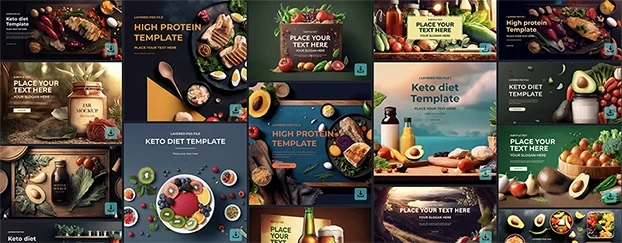
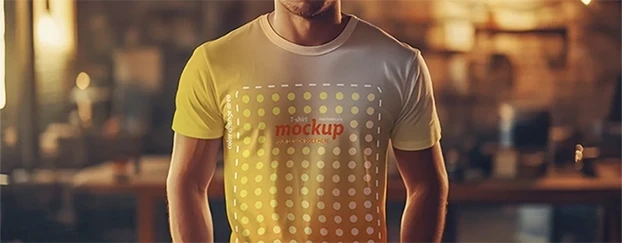
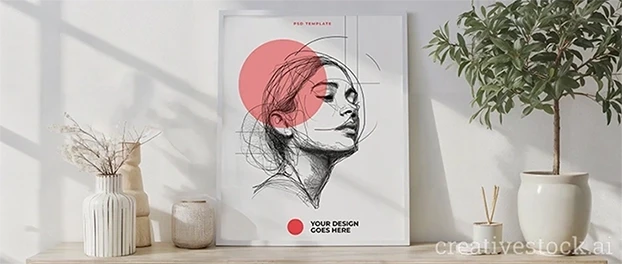
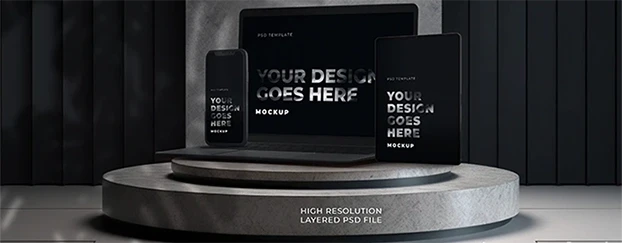
High-performing teams rely on ready-to-use templates and high-resolution mockups to produce market-ready previews in hours, not days. Not because they’re lazy - because faster feedback reduces waste and makes decisions easier to defend.
Before your next kickoff, build a three-lane preview kit: mobile UI, physical/print application, and one real-world placement (OOH, feed, or product-in-hand). Authority follows clarity.

Platform reality: feeds are testing labs
Digital platforms didn’t “kill creativity.” They turned it into an experimentation surface.
Teams increasingly want instant previews - billboards, packaging, app screens, product scenes - so they can test message clarity and hierarchy before production. That’s why AI-generated assets and templates moved from “nice acceleration” to decision infrastructure.
If you want a more business-native framing for why experimentation beats opinion (especially under uncertainty), HBR’s coverage of experimentation-led decision making is a clean, credible backbone.
This isn’t guesswork replacing taste. It’s taste being tested where it actually matters: in context.
Turn your five most common deliverables into modular systems you can reskin in minutes - copy, color, crop, placement. If you need a jumpstart, grab a few free mockups & templates to prototype your flow today.
Pricing reality: why packages beat hourly
Hourly pricing punishes efficiency. Packages reward outcomes.
In the future of creative work, designers who win sell experiments, not execution time. Productized offers - Launch Sprints, Campaign Kits, Seasonal Refreshes - bundle variations, previews, and rollout assets around a defined decision.
What strong packages include:
- Fixed number of concept variations
- Defined testing context and duration
- Clear decision criteria
- Final asset scope based on the actual winner
Rename proposals around outcomes: “Spring Launch Kit - 8 Experiments → 1 Winner.” Watch friction drop.
Skills that compound in 2026
Strategy - If a visual can’t articulate what behavior it’s meant to change, it’s decoration. Decoration doesn’t scale.
Systems - A reusable stack - devices, packaging, print, signage, UI - compresses time-to-signal and protects quality at speed. When you need seasonal velocity, have a niche kit ready (e.g., Seasonal & Holiday templates).
Presentation (yes, showmanship) - Context sells. Sequencing matters. Realistic previews reduce “imagination tax” and shorten approval loops - because stakeholders can finally react to something that feels real, not hypothetical.
Standardize a five-scene presentation rule and never break it.
Income outlook: where designers win (and don’t)
Here’s the design industry forecast for 2026, without the motivational poster:
- Upward and stable: Designers who bundle strategy, experiments, and validated rollout. They monetize judgment, not keystrokes.
- Flat and fragile: File-based executors competing with marketplaces and internal template libraries.
- Volatile: Studios that skip validation and burn budget guessing.
If you’re still selling “deliverables,” you’re competing on replaceability. If you’re selling “decisions,” you’re competing on trust.
Add an “Experiment Ladder” section to your portfolio. Show process + proof, not just shiny finals.
Creative industry predictions for 2026 (plan around these)
- Concept-to-launch in hours becomes normal in fast-moving categories.
- Hybrid quality wins: fast generation, human refinement where it matters.
- Outcome-driven intent grows: buyers search for workflows, not tools.
- Proof-first portfolios dominate: documented experiments beat pretty finals.
- Niche systems outperform generalists: vertical-specific asset stacks close faster and price higher. Example: validate holiday messaging with a winter campaign template before you overproduce the wrong vibe.
Pick one niche and build a micro-OS that solves 80–90% of its requests.
Data signals worth tracking
- Time to visible concept (hours, not days)
- Variations per pitch (3–5 minimum)
- Zero-shoot project percentage (rising)
- Margin delta: packages vs hourly
- Close-rate lift from in-context previews
If your metrics aren’t drifting this way, the market is already voting.
FAQ
How do designers make more money in 2026?
By productizing decisions: packages that include variations, in-context previews, and a winner rollout. You’re not paid for clicking - you're paid for reducing uncertainty.
Does AI crash prices?
It crashes repetition. It raises the premium on judgment, narrative, and restraint.
Is mockup-first anti-craft?
No. It protects craft by applying it where it compounds - after early feedback, not before it.
Do templates kill brand identity?
Only bad ones. Systems accelerate execution; taste defines the identity.
Closing shot
2026 doesn’t reward the most patient pixel-pusher. It rewards the designer who proves fast, shows work where it lives, and commits to winners without mourning drafts.
Your edge isn’t a tool. It’s judgment - packaged as outcomes and powered by systems.
Keep the sketchbook.
Ditch the drama.
Ship the proof.
Ready to package outcomes, not hours? Check your pricing options and start with a plan that includes experiments, previews, and winner rollout.