
If you came here hoping for a pep talk, wrong door.
I’ve spent two decades watching talented designers sabotage client reviews with one sentence: “What do you think? Be honest.” That’s not collaboration. That’s outsourcing your spine.
If you want to stop sounding defensive and start guiding decisions, you need structure - not swagger.
The rot at the core: approval addiction
Some designers don’t run a review. They audition.
They show five near-identical options “just in case.”
They narrate every pixel.
They wait for permission.
That behavior is what keeps you stuck in revision loops and invisible positioning.
If you want to understand how this dynamic affects your long-term leverage, read more about freelance designer positioning. Because this isn’t just about meetings. It’s about how you’re perceived.
Seniors survive because they decide.
Juniors burn out because they defer.
Big question you’re too tired to articulate
Why do I need approval for every decision - and how do I stop without faking confidence?
Because you were trained to please, not to lead.
The solution is not acting dominant.
The solution is using a repeatable decision structure.
The 5-part structure that ends wandering feedback
Use this order every time.
- Goal
“We’re redesigning this page to increase trial sign-ups by 12%.” - Audience
“Primary audience: new mobile visitors who skim.” - Options (max two)
“Two directions: Clarity-first and Desire-first. I recommend Clarity-first.” - Tradeoffs
“Clarity-first reduces bounce risk. Desire-first may increase AOV but adds cognitive load.” - Next step
“I propose we move Clarity-first into a 7-day A/B test. Approve or suggest one adjustment.”
Read it again.
Notice what’s missing?
Apologies.
Over-explaining.
Try-hard artspeak.
This is not a performance. It’s decision framing.

Why limiting options accelerates decisions
When you present five options, stakeholders default to taste. When you present two options with explicit tradeoffs, they default to risk evaluation.
Research on choice overload research shows that too many options increase decision deferral and reduce confidence in outcomes. In meetings, that deferral becomes: “Let’s revisit next week.”
Limiting options isn’t ego. It reduces ambiguity and clarifies tradeoffs.
Decision speed improves when the frame narrows.
When a client asks: “Why this design?”
You don’t open Figma and zoom to 800%.
You answer with principle + evidence.
- “We selected this contrast level to meet WCAG accessibility standards.”
- “The hierarchy reduces reading depth to three lines on mobile.”
- “We’re prioritizing clarity over novelty to minimize friction.”
If needed, reference usability research on cognitive load - because reducing mental effort increases comprehension speed.
Every answer leads back to:
Goal → Audience → Tradeoff → Decision.
Not taste.
Show the work in context, not isolation
Clients don’t want “more options.”
They want certainty.
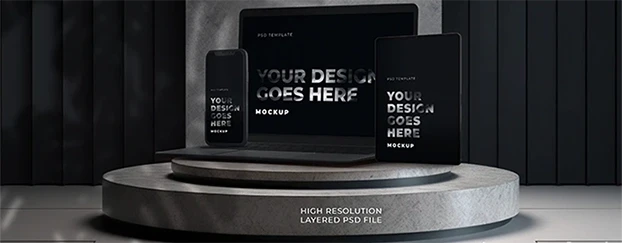
Present the concept in real-world context - packaging on shelf, mobile in hand, hero section inside layout.
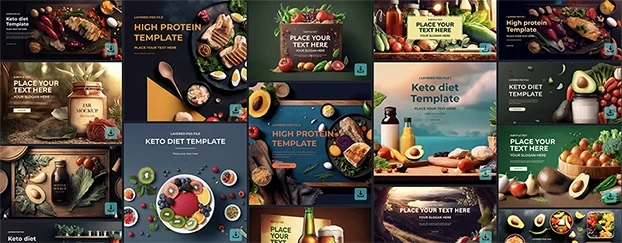
Use high-quality professional presentation templates to collapse abstract debates into visible outcomes. Context eliminates subjective drift.
If they can see the decision clearly, they stop inventing new ones.
Eliminate defensive explaining (The Three-Beat Rationale)
Stop narrating your process. Use three beats:
- Principle - “We prioritize clarity before visual novelty.”
- Evidence - “This structure halves reading time on mobile.”
- Implication - “Faster comprehension increases conversion probability.”
Then stop talking.
If you struggle turning design work into structured reasoning, use a documented walkthrough like this design case study template to sharpen how you articulate decisions.
Over-explaining signals uncertainty.
Structured reasoning signals leadership.
Your next meeting - word for word
Open like this:
“Goal: Increase trial sign-ups by 10% on mobile.
Audience: New users who skim.
Options: Route A (Clarity-first) and Route B (Desire-first). I recommend A.
Tradeoffs: A reduces bounce risk. B may lift perceived value but increases cognitive load.
Next step: Approve A for a 7-day test. If we miss target, we pivot.”
If someone shifts to personal taste, anchor back to the objective.
You are not there to collect opinions.
You are there to move the decision forward.
FAQ
How do I present confidently if I’m nervous?
Use the 5-step structure. Decide your recommendation before the meeting. Limit options to two. Read your opening if needed. Confidence comes from structure, not emotion.
What if a stakeholder rejects my recommendation?
Translate the objection into a decision criterion. If criteria shift, adjust. If not, propose a short experiment. Turn disagreement into measurable validation.

Final word
Professionalism isn’t charisma.
It’s constraints.
It’s clarity.
It’s cadence.
Run the structure.
Frame the decision.
Stop auditioning.
If you want assets that help you present work faster and with authority, view pricing and streamline how you ship decisions.