
You’ve got a “beautiful” portfolio. Fellow designers clap like seals. Behance loves you. And yet: bad clients, low fees, ghosted proposals. I’ve been doing this twenty years and I made the same mistake - building a shrine to craft when buyers are begging for a map to business outcomes. Why do I have a ‘good’ portfolio, yet I keep landing bad clients, low-paying work, or no offers at all? Because you built it to impress designers, not to reassure buyers.
Definition: What is a buyer-ready design case study?
A one-page story that proves outcomes: context → constraints → decisions → proof → results → next step. No fluff. No tool cosplay. Just why it mattered and what changed.
If designers praise your work but buyers don’t, here’s why: they scan for confidence - timeline sanity, decision logic, measurable outcomes. A portfolio that attracts clients makes the business problem obvious, shows how you thought under constraints, and proves what moved (conversion, retention, take-rate, support tickets - anything falsifiable).
Different buyers look for different signals.
- CMO: risk, metrics, stakeholder alignment, predictable timelines.
- Founder: speed to impact, ROI, clarity, autonomy (no babysitting).
- PM: collaboration under constraints, decision logs, handoff quality.
If your captions say “Designed a cool thing :)” you’ve built a museum, not a sales tool. For usability expectations, borrow from the Nielsen Norman Group’s plain-language heuristics to keep case studies scannable and decision-centric.
The 1-page portfolio case study template (steal this)
Here’s the compact design portfolio case study template I force on juniors who want better clients:
- Outcome headline (lead with results): “+27% trial signups in 45 days for a SaaS onboarding redesign.”
- Snapshot row: Industry • Company size • Team • Role • Timeline • Scope.
- Context & Objective: 3–4 sentences naming the business pain and the numeric target.
- Constraints: Bullets - time, budget, politics, legacy tech. Buyers live in reality; show you do too.
- Key Decisions (3): Each decision + one-sentence rationale.
Proof:
- Metrics before → after (clean numbers).
- One user quote, one stakeholder quote, one visual before/after.
- Outcome & Next Step: What improved and what you’d test or scale next.
- Plain CTA: “Got this problem? Here’s how I’d approach your case.”
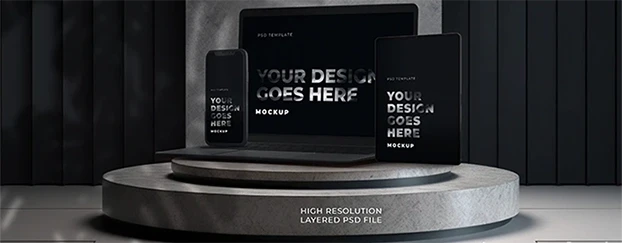
If you want ready-made assets to illustrate outcomes (not just pretty shots), grab production-grade mockups and keep screens in a collapsible gallery below the story.
How to write a portfolio case study that wins clients
You don’t need a memoir. You need velocity and clarity - case study writing for designers that fits in a workday:
- Self-interview (15 min): What goal mattered? What blocked it? What did you change? What moved?
- Extract three decisions: If you can’t name them, you decorated; pick a project where you led.
- Quantify something: Conversion, error rate, time-to-handoff, support load - anything falsifiable.
- Choose one before/after visual: One. Parade later.
- Write ugly, edit ruthless: First draft for thinking, second for buyers, third for skimmability.
For a deeper positioning pass (so your stories land with actual decision-makers), read my no-nonsense take on freelance designer positioning and apply it to your intros and headlines.
What to include in a design portfolio to attract buyers
Here’s the minimum set that makes real clients call:
- Industry tags: “B2B SaaS • CPG • Fintech” so prospects self-select in seconds.
- Typical project sizes & timelines: “$8k–$25k • 4–8 weeks” to filter low-ballers.
- Process thumbnail: 5 steps, one line each - reassurance, not a TED Talk.
- Collaboration model: “I lead design + PM” or “I integrate with your devs.” No surprises.
- Outcomes grid: Six tiles linking to case studies; each tile is an outcome (“+18% repeat”).
- Availability: Next start date. Scarcity signals demand, not drama.
If you’re turning these into visual blocks, start from clean templates so the content - not the chrome - does the selling.
When you cite proofs, reference something sturdier than vibes. Think testable results, or even a relevant Harvard Business Review idea about decision quality and ROI to frame your outcome in the language executives respect.

A mini real-world example (anonymized)
Context: Mid-market B2B SaaS had a leaky checkout; pricing and backend were off-limits.
Constraints: 3 sprints, mixed design system, legal copy fixed.
Decisions:
- Re-sequenced steps so value is proven before plan selection.
- Tightened microcopy to mirror user goals, not billing jargon.
- Standardized error states and inline validation to kill ambiguity.
Proof: Support tickets on checkout down 18%; completion up 9% in 30 days.
Next step: A/B test cross-sell timing; extend patterns to self-serve upgrades.
If you need a sanity check on how you present evidence, skim how Wiley-published papers structure “context → method → result → limitation”—it’s bland, but buyers equate that structure with credibility.
3 portfolio mistakes that attract low-paying clients
- Dribbble-brain: Shots first, story never. You read junior even if you aren’t.
- Tool cosplay: Listing plugins and palettes. That’s technician energy.
- “I did everything.” Serious teams want clarity on scope, teammates, and your slice of the win.
Fix them with a portfolio storytelling structure and - if you insist on eye candy - host it somewhere that doesn’t overshadow the argument. Keep your home base focused on outcomes; your visual playground can live on social. When you want a clean, outcome-first build without fighting your CMS, I won’t cry if you borrow a layout pattern from CreativeStock.ai for a week and just ship.
Example rewrite: from “pretty screens” to “paid work”
Before: “Redesigned mobile onboarding. New gradient, modern look.”
After:
- Outcome: Drop-off 62% → 41% in 6 weeks; trial-to-paid +19%.
- Context: Freemium app bleeding users on permission screens; legal copy non-negotiable.
- Constraints: 3 dev sprints, no new backend, privacy-sensitive category.
- Decisions:
Consolidated permissions into two clearer asks post-value reveal.
Rewrote microcopy to map to user intent.
Added a two-step progress indicator to lower anxiety. - Proof: Heatmap showed 34% more “Continue” taps; onboarding tickets −22%.
- Next: Test timing of optional sign-in; roll copy approach to web.
How to make a portfolio that gets higher-paying clients
Lead with outcomes, not aesthetics. Beauty’s a bonus; risk is the obstacle. Show restraint: one result, one visual, one decision per block. Publish pricing signals so bargain hunters self-eject. Ship consistently: one new case study per month beats a mythical relaunch. Make next steps obvious: email, calendar, short intake - booking you shouldn’t feel like a side quest.
If you want your visuals to keep pace with your story without eating weekends, lean on outcome-oriented assets from a marketplace that’s built for speed and relevance, not just decoration; I use that approach to keep iterations ruthless and on-message.
FAQ
1) Why does my design portfolio get praise but no clients?
Because it’s tuned for designer applause, not buyer confidence. Shift from artifacts to outcomes: problem, constraints, decisions, proof, results, next step. Add industry tags, project ranges, and a clear CTA. Within weeks you’ll see fewer tire-kickers and more qualified conversations.
2) How do I write a portfolio case study that actually wins clients?
Start with the result, then backfill the logic. Use a one-page outline: Outcome → Context & Objective → Constraints → Three Decisions → Proof (metrics + one quote + one visual) → Next Step. Keep it ~300 words. If you can’t name decisions or numbers, choose a project where you led, not assisted.
3) What should I include to attract higher-paying buyers right now?
Publish industry focus, typical budgets/timelines, collaboration model, and an outcomes grid linking to case studies. Make booking effortless. That mix broadcasts portfolio positioning and filters out low-budget leads, so your pipeline skews toward teams who value decision quality over cheap labor.

Final word (and your next move)
Portfolios that win aren’t louder - they’re clearer. Lead with outcomes, show the three decisions that made them happen, prove the movement, and make hiring you painfully easy. Ship one one-page case study this week, publish budget/timeline ranges, and cut the fluff that only impresses other designers. When you’re ready to back that clarity with production-ready assets and a cadence you can sustain, choose a plan that supports it - check the pricing.