Let me say the quiet part out loud: clients don’t pay us for pixel-pushing anymore. They pay for results, yesterday. And in that world, creative stock doesn’t “kill” freelancers - it kills the waste. I’m a cranky senior designer with the back pain and deadline PTSD to prove it, and I’m telling you: letting specialized libraries do the heavy lifting is how you keep your margins, your sanity, and your weekends. Start from the CreativeStock.ai home hub and you’re already closer to done - premium graphic design assets you can use or tweak fast, without weeks of shoots or rounds.
First, take a look at the actual playground we get to use: the hub is where your sprint starts, not ends. It’s built to democratize design - high-resolution, professional-grade assets and a search that gets you to “done” faster. Translation: fewer hours burned, more value shipped. Jump in with visual search and get to the good part.
The uncomfortable math clients already did (so you should, too)
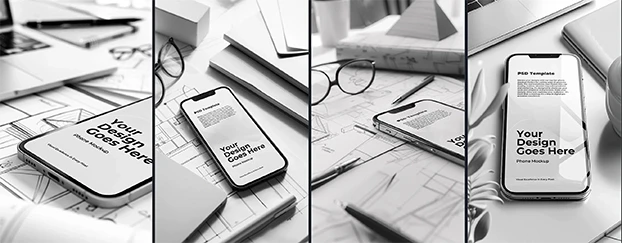
A freelance day rate dies by a thousand micro-tasks: sourcing references, staging mockups, “quick” brand iterations. Libraries of AI mockups erase half that itinerary in minutes. Begin in the AI mockups library and you’ll see device, packaging, apparel, and print scenarios laid out like a storyboard you didn’t have to shoot. If you think that’s “cheating,” your client calls it “launching.”
Stop bleeding hours. Start comping faster.
Quality isn’t the problem - reinventing the wheel is
“But my work is bespoke.” Same. It still starts with scaffolding. Use Customizable templates to jump straight to layout conversations, not margin doodles - you swap colors, type, visuals, then prove the concept in context with a realistic preview. Clients see outcomes, not abstract promises - that momentum closes projects. For the data-minded: here’s research on generative AI boosting highly skilled workers’ productivity that mirrors what you’ll feel when you adopt this workflow.
Also: these aren’t raw, unedited AI dumps; they’re AI-generated, designer-perfected assets that hold up at 400% zoom. Use the tool for speed, keep your eye for taste. That combo is the moat.
Your taste stays; your busywork doesn’t.
“Generic” is a choice, not a destiny
If your deliverables feel cookie-cutter, the asset isn’t the problem - the curation is. Start with niche-specific contexts, then layer brand nuance:
- For product launches, comp screens fast with device & tech mockups - show the app where it lives, not floating in Figma purgatory.
- Apparel brand? Stress-test color and print placement using apparel mockups before the client blows money on samples.
- CPG or DTC? Iterate dielines and brand voice with packaging mockups that look like an actual shelf photo, not a flat PDF.
Curate like an art director, not a hoarder.

Your real value isn’t pixels - it’s decisions
Clients hire you to collapse uncertainty. Templates and mockups are just the evidence you marshal. You’re there to pick the right hierarchy, the right visual story, the right market reads. That’s why I love using free mockups & templates early - build trust with a low-lift proof of concept, then move the conversation to strategy, not speculation.
Within the first hour, I present two or three on-brand scenarios with instant design previews. We’re debating direction, not “can you make the logo bigger.” This saves rounds, budget, and my lifespan.
Show outcomes first, argue less later.
The SEO elephant: why “more of you” will get found, not less
Worried a marketplace buries your uniqueness? Then make it your amplifier. When you prototype faster, you publish more - case studies, landing pages, and content. And content is how clients find you. You don’t win search with feelings; you win by shipping. Rotate head terms like AI mockups and Customizable templates under the broader creative assets marketplace / graphic design assets umbrella as you build your portfolio and posts. The catalog maps cleanly to buyer tasks (mockups, templates, categories), so your case studies can mirror how people actually browse and buy.
Publish more, get seen more, bill more.
A grumpy senior’s sprint recipe (steal it)
Here’s my blunt, battle-tested flow for a brand sprint that doesn’t wreck your sleep:
- Interrogate the brief for goals, constraints, and non-negotiables. Translate those into visual hypotheses you can actually prove.
- Pull scenarios from the AI mockups library (devices, packaging, apparel) and pair them with Customizable templates for social, landing, or print. You’re shaping a system, not a single poster. Start with print materials mockups so concepts look like real deliverables from hour one.
- Prototype with freebies to kill objections early; if the client balks, you haven’t sunk hours.
- Refine with discipline - narrow style, angle, and use-case before you add polish.
- Present outcomes, not options - three tight directions with live context, not fifteen unstyled frames.
- Lock the system (type, color, grid, imagery do’s/don’ts), then export exactly what each channel needs.
This is how you turn “eat or be eaten” into “eat efficiently.”
“But doesn’t this replace me?” No - mismanaging time replaces you
Look, the market was already cutting corners. The difference now is you can cut the right corners. Creative Stock’s pipeline - AI-generated, designer-perfected - means you don’t have to apologize for speed. You do you: the strategic choices, the brand lens, the synthesis. Let the marketplace handle the commodity scaffolding. That’s not surrender; that’s senior behavior. If you’re building hybrid teams or flexing capacity, this HBS study on building the on-demand workforce is a helpful lens for structuring external talent without chaos.
Ship taste at scale.

Final word (and the only “salesy” thing I’ll say today)
If Creative Stock helps you launch sharper work in hours instead of days, that’s not “the end of freelancing.” It’s the end of chaos. Start where it’s easiest: proof ideas with the AI mockups library and Customizable templates, validate with freebies, and curate like a pro. Then price your value on outcomes, not on how long you can suffer in Photoshop. When you’re ready to turn this into a repeatable machine, pick a plan that matches your pipeline - Pricing.